
2026-08-22 ·
When To Check Your Main Water Shutoff Valve In Phoenix
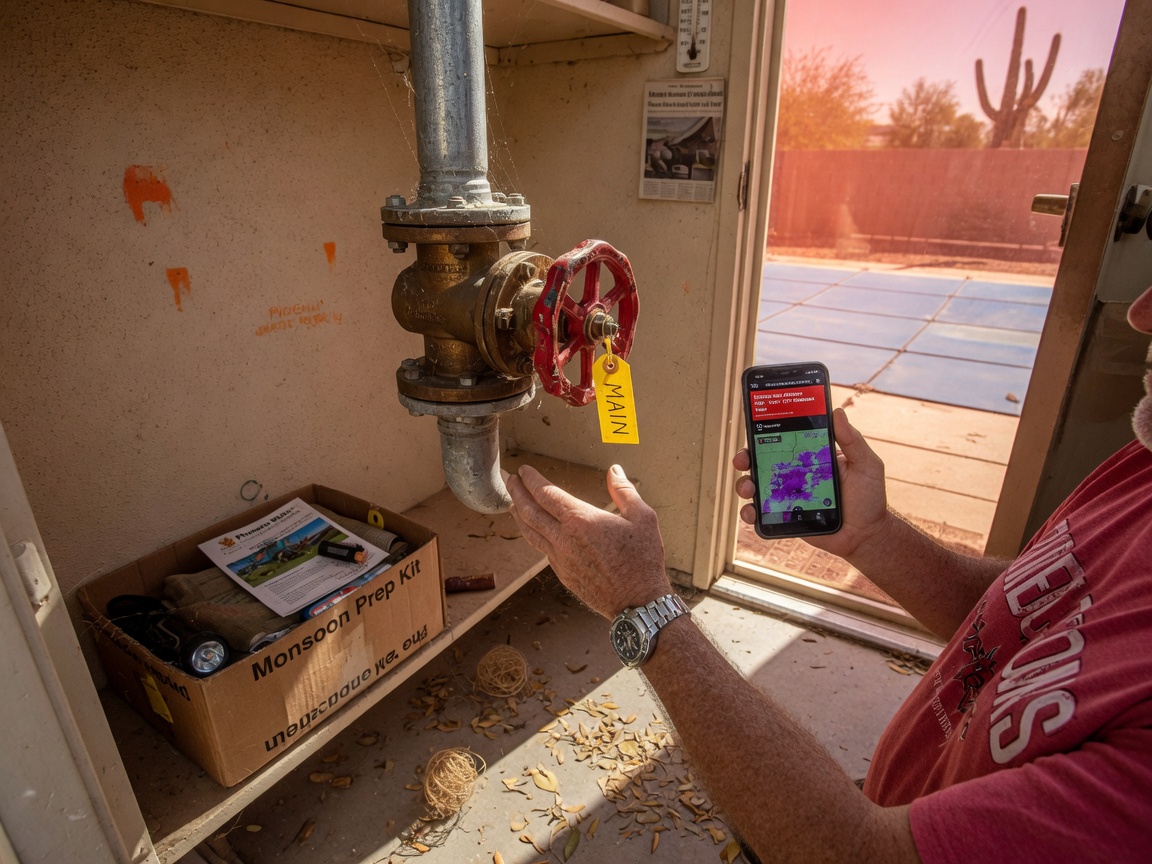
Check your main water shutoff valve every six months in Phoenix, with the most important times being right before monsoon rains arrive and immediately after any stretch of extreme summer heat above 110 degrees. These intervals address the real stresses placed on plumbing by the local desert climate and older housing stock found throughout Maricopa County. In neighborhoods such as Arcadia and Biltmore, many homes built decades ago rely on copper lines that expand and contract with temperature swings, making early detection of corrosion or stiffness at the valve critical. Regular checks also apply after any reported low water pressure issues that might signal a developing problem upstream.
Before Monsoon Rains Arrive
Phoenix monsoon season typically brings sudden heavy downpours that can overwhelm older drainage and increase the chance of water backing up around foundations. Homeowners in Camelback East and Ahwatukee should locate and test the main shutoff valve in late May or early June before storms hit. Turn the valve clockwise to close it fully, then reopen it to confirm smooth operation without grinding or resistance. This step prevents a small leak from turning into widespread damage when rain saturates the soil around slab foundations common in these areas. Pair this check with a review of preparing plumbing for monsoon rains in the valley to understand how storm water interacts with shutoff points.
After Periods of Extreme Summer Heat
Daily highs above 110 degrees cause pipes and valves to expand, which can loosen packing nuts or create micro-cracks in older brass components. In Maryvale and South Mountain, where many homes date from the 1970s and 1980s, these temperature cycles accelerate wear on shutoff valves that sit partially exposed. Test the valve by closing and reopening it fully once temperatures drop back into the low 100s, usually in late September. Note any seepage around the stem or difficulty turning the handle, both signs that replacement may be needed before winter. Linking this habit to leak detection helps catch issues early in the hottest months.
When Pressure Drops Suddenly in the Home
A sudden drop in water pressure often points to a partial obstruction or leak between the meter and the house, making the main shutoff valve the first place to isolate the system. Residents in Arcadia and near Papago Park frequently encounter this after construction activity disturbs lines or after years of mineral buildup from hard desert water. Close the valve completely, then reopen it while monitoring flow at an outdoor spigot to see if pressure returns. If the issue persists, schedule leak repair rather than attempting further adjustments. This approach also connects to guidance in fixing low water pressure issues in arcadia homes.
After Any Reported Slab or Foundation Work Nearby
Construction or landscaping near the foundation can shift soil and stress the main line where it enters the home. In Central City and West Phoenix, where many properties sit on expansive clay soils, even minor excavation can affect valve alignment. After any such work, close and reopen the valve several times while watching for new drips at the connection point. This simple test confirms the valve still functions as the primary isolation point before calling for slab leak repair if needed.
During Routine Home Maintenance Visits
Incorporate the main shutoff valve check into any annual plumbing inspection, especially for homes in the Biltmore Area and near Chase Field that see heavy seasonal use. A 24-hour emergency plumber can demonstrate proper technique during these visits, ensuring the valve remains accessible and operable year-round. Consistent testing reduces the risk of discovering a seized valve only when water is actively flooding a property.