
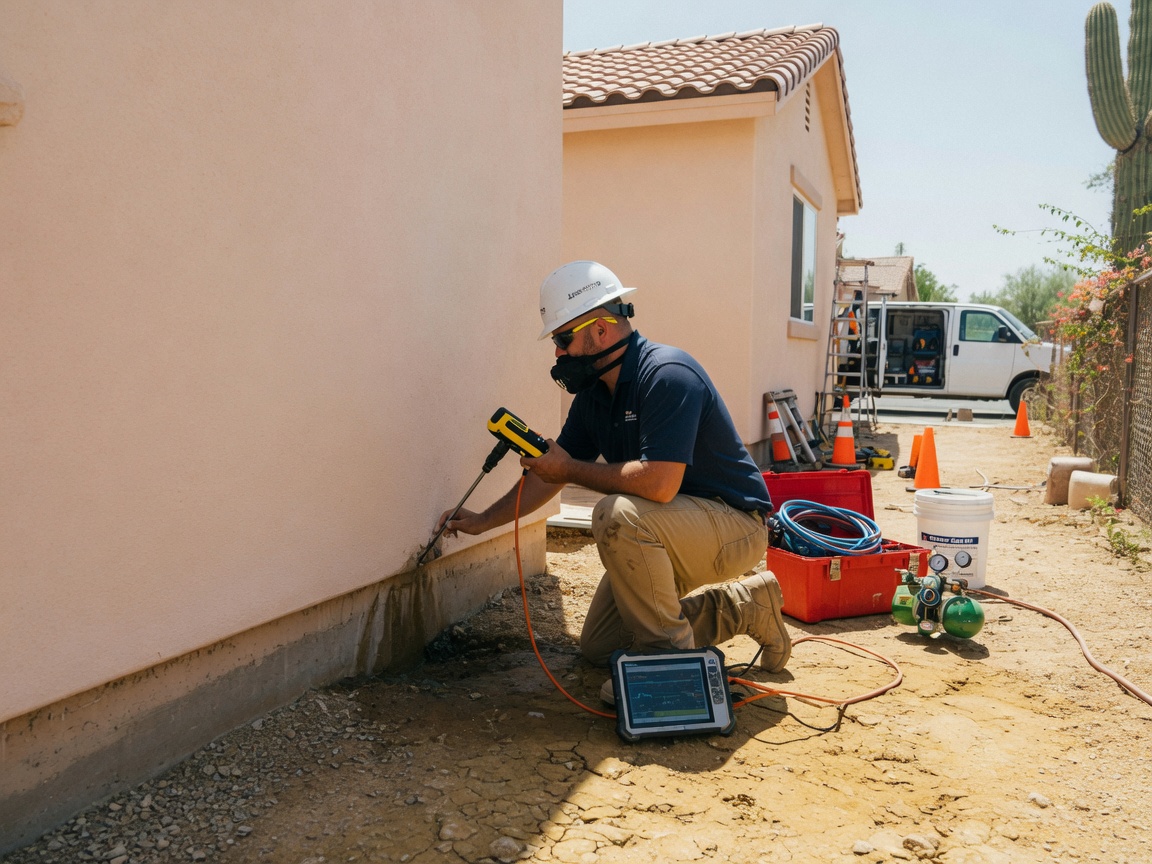
Phoenix homes built before the 1990s in neighborhoods like Arcadia and Biltmore often have galvanized or polybutylene lines that corrode faster under the city’s hard water and extreme summer heat. When a leak develops behind tile or under slab, moisture can travel along the compacted desert soil and appear far from the actual breach, which is why simple visual checks miss the source. Electronic listening devices and thermal imaging let us trace the line without tearing up finished surfaces first.
Maricopa County code requires any water line repair that disturbs more than ten feet of pipe to be permitted, so we document the exact location and pressure test results before excavation begins. In Ahwatukee and South Mountain properties built on rocky fill, vibration from nearby traffic along the 101 can loosen older fittings; we factor that movement into our search pattern. Homeowners who wait until a drip is audible usually face larger drywall or concrete repairs than those who call when the water bill first spikes.
Summer monsoons raise groundwater levels around Papago Park and Camelback East, pushing small leaks into noticeable wet spots within hours. We carry both acoustic amplifiers and video inspection cameras rated for 140-degree pipe temperatures so we can work through the peak heat without equipment failure. After locating the leak we provide a written map of the line and recommend whether a spot repair or partial repipe makes more sense for the home’s age and construction.
Technician insight
In Phoenix the thing that catches most people out with Leak Detection is how fast a small pinhole in polybutylene under an Arcadia slab turns into major drywall damage once monsoon moisture raises the water table; homeowners often assume the wet spot is a roof issue until we pressure-test and show them the line is the culprit.
Hidden Slab Leak in Biltmore
A homeowner in Biltmore noticed a warm spot on the tile floor and rising water use. We isolated the hot-water line, ran an acoustic scan, and located a pinhole leak under the slab near the water heater. We mapped the line, performed a permitted spot repair with new PEX, and restored the floor section the same afternoon.
Leak Detection Services We Offer
✓Slab Leak Detection
Non-invasive electronic and thermal scanning to locate leaks under concrete slabs common in Ahwatukee and Maryvale homes without unnecessary demolition.
✓Acoustic Pipe Listening
High-sensitivity microphones trace water movement through walls and underground lines in older Biltmore and Arcadia properties where visual access is limited.
✓Thermal Imaging Leak Scans
Infrared cameras detect temperature differences caused by escaping water in South Mountain and Camelback East homes during extreme summer heat.
✓Pool and Spa Leak Detection
Pressure testing and dye tracing for leaks in pools near Papago Park and Desert Botanical Garden where evaporation and plumbing runs complicate diagnosis.
✓Roof and Attic Leak Location
Moisture meters and scoping cameras find entry points in tile and flat roofs typical of Tempe and Mesa border homes before monsoon season.
Leak Detection Cost in Phoenix, AZ
| Service | Typical Range | What Affects It |
|---|---|---|
| Basic Electronic Scan | $250–$400 | Single-story homes with accessible shutoffs; higher in multi-story Arcadia properties. |
| Slab Leak Detection | $350–$600 | Includes thermal imaging; price rises with thick decorative concrete or landscaping. |
| Pool Or Spa Line Test | $300–$500 | Covers main lines and returns; additional zones add to the range. |
| After-Hours Or Weekend Call | $100–$150 | Added to base detection fee for 24/7 response. |
Ranges are typical for Phoenix, AZ and confirmed with an exact written quote before any work starts.
How it works
- 1
Phone Assessment
We ask about recent water bills, visible moisture, and home age while dispatching a technician within the hour from our 24-hour Phoenix base.
- 2
On-Site Pressure Test
We isolate sections of the line and monitor for drops to confirm whether the leak is in the main, a branch, or an appliance connection.
- 3
Electronic Or Thermal Scan
Using acoustic amplifiers or infrared cameras we map the leak path through slab, walls, or yard without exploratory demolition.
- 4
Findings Review And Repair Plan
We show the exact location on a diagram, explain code requirements, and outline repair options before any work begins.
Pricing
Most leak detection calls in Phoenix fall between $250 and $650 depending on access and number of lines tested; repairs are quoted separately after the source is confirmed.