
2026-08-22 ·
How To Prevent Frozen Pipes During Rare Phoenix Cold Snaps
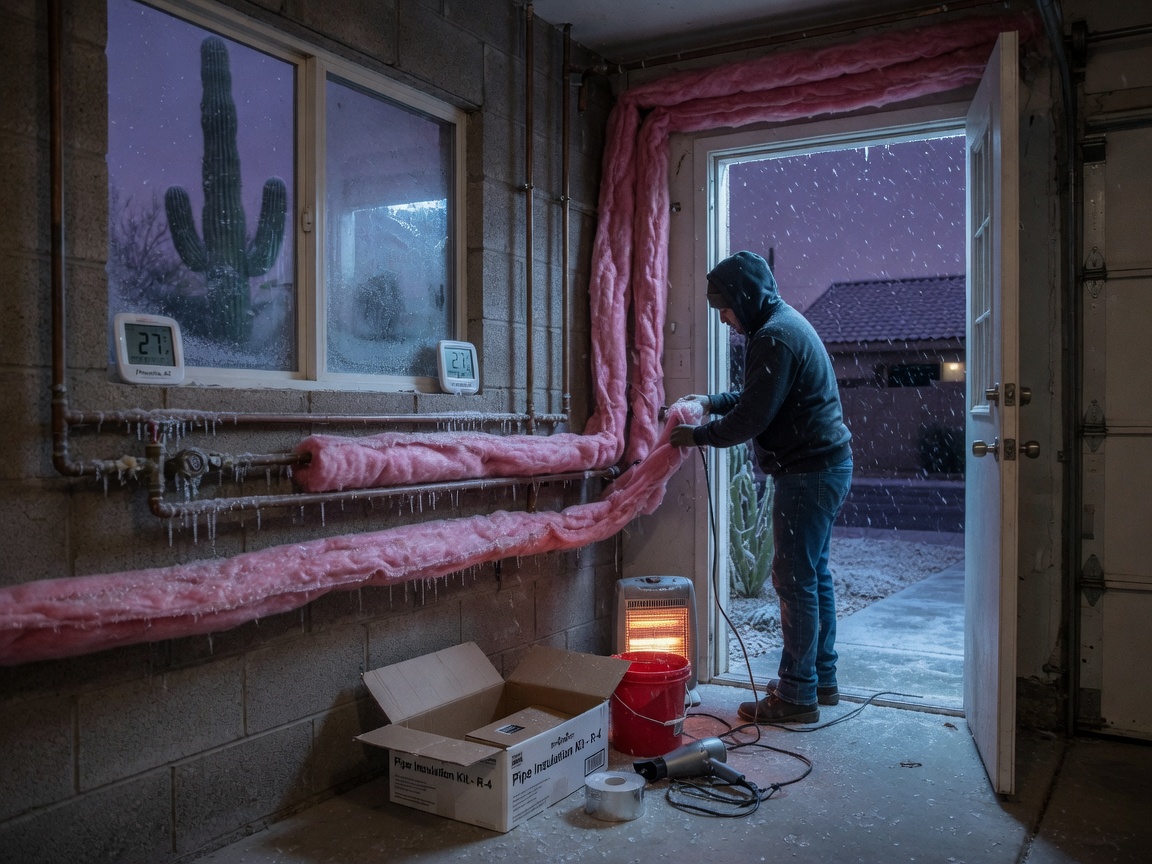
In Phoenix, the most effective way to prevent frozen pipes during rare cold snaps is to insulate exposed lines and let faucets drip slowly once overnight lows fall below 32°F. This approach works because the city’s hot desert climate leaves most residential plumbing unshielded against even brief freezes that hit neighborhoods such as Arcadia, Biltmore and Ahwatukee.
Understanding Local Climate Risks to Pipes
Phoenix sits in Maricopa County where summer highs often exceed 110°F, so builders rarely bury or wrap supply lines for winter protection. When a cold front arrives from the north, temperatures can dip into the 20s for one or two nights, enough to freeze water in exterior hose bibs, garage pipes and crawl-space lines common in 1960s–1980s homes throughout Camelback East and Maryvale. The same desert soil that drains quickly also loses heat fast after sunset, leaving shallow pipes vulnerable. Nearby cities like Scottsdale, Tempe and Mesa share identical conditions, so the pattern repeats across the valley. Older properties in these areas often have galvanized or copper lines with minimal insulation, increasing the chance of ice expansion and bursts if water is left stagnant.
Locating Exposed and At-Risk Lines
Walk the perimeter of homes in South Mountain or Papago Park and note any pipes running along exterior walls or under raised patios. Check the garage, laundry room and water heater closet where lines often run near vents or thin exterior walls. In Arcadia and Biltmore, many mid-century houses have laundry rooms added later with pipes routed through unconditioned attics. Use a flashlight to spot sections within 6 inches of outside air or touching concrete slabs that radiate cold. Pay special attention to hose bibs on the north side of the house; these receive the least sun during short winter days and freeze first when the desert temperature plummets after dark.
Insulation and Drip Methods That Work Here
Wrap vulnerable lines with foam pipe insulation sleeves at least ½-inch thick, available at any local hardware store, and secure with tape rated for outdoor use. For hose bibs, install inexpensive foam covers that slip over the spigot and stay in place with Velcro. When forecasts show lows near 30°F, open the faucet farthest from the meter a quarter turn so a steady pencil-thin stream flows; moving water resists freezing far better than still water. Keep cabinet doors under sinks open to let indoor heat reach pipes. In homes near Chase Field or the Desert Botanical Garden where wind can accelerate heat loss, add a small space heater in the garage set on low if pipes run along the back wall. These steps take under an hour yet address the exact conditions created by Phoenix’s rapid day-to-night temperature swings.
Monitoring and Quick Response Steps
Check the weather each evening during winter and set a phone alert for any forecast below 35°F. If a pipe feels unusually cold or you notice reduced flow, open nearby faucets fully to relieve pressure before ice can expand. Should a line still freeze, shut off the main valve immediately and call for burst pipe repair rather than applying direct heat that can crack older copper. Properties built before 1980 in areas like Arcadia often share sewer lines that also need attention during freezes; review understanding sewer line problems in older Phoenix properties for additional guidance. Keeping a few towels and a wet-dry vac ready helps manage minor drips until help arrives. Phoenix Plumbing Specialists remains available around the clock to assist residents across the valley whenever unusual weather threatens plumbing systems.